
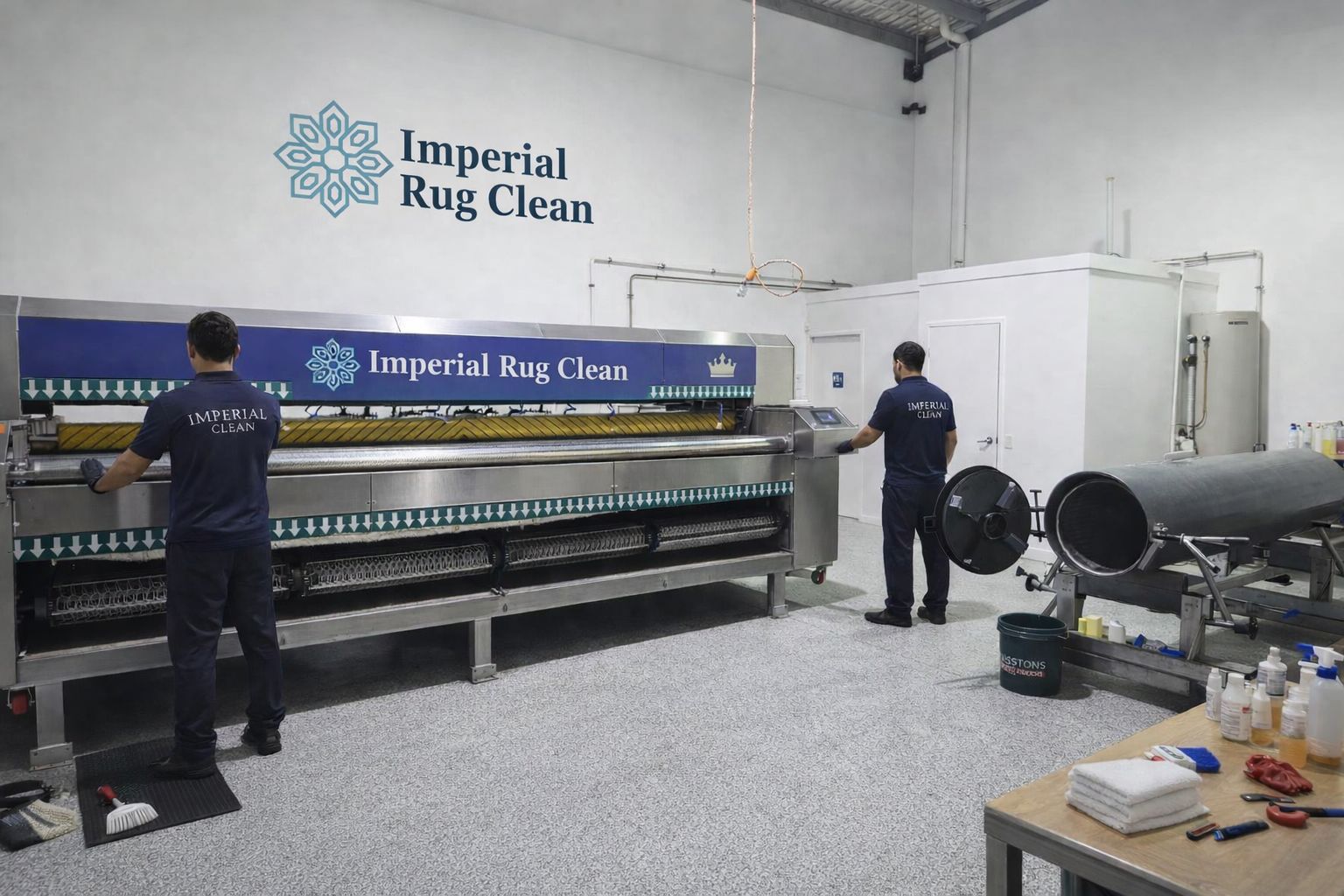
Rug cleaning services sound straightforward. You drop the rug off. It gets cleaned. You pick it up. But once you start comparing providers, things get murky fast. Some rug washers offer surface steam cleaning. Others promise “deep clean” without explaining what that actually means. Prices vary. Methods differ. And very few explain what happens behind the scenes.
The real challenge is not finding a professional rug cleaning service. It’s understanding what professional rug cleaning actually involves, and how to tell the difference between a proper deep wash and a quick surface treatment. This confusion is common. Rugs act like filters in the home, trapping dust, allergens and fine grit deep in their fibres. The Institute of Inspection Cleaning and Restoration Certification (IICRC) notes that soil trapped in textiles can contribute to fibre wear and indoor air concerns if not removed properly. At the same time, Australian households increasingly use large area rugs in living rooms, bedrooms and high-traffic spaces. High demand, mixed service standards and unclear processes create uncertainty.
In this blog, we’ll walk through each stage of the professional rug cleaning process. Read On!
Step 1: Pre-Clean Inspection and Fibre Assessment
Every professional deep cleaning service should start with an inspection. Not washing. Inspection.
Rugs are made from different fibres. Wool behaves differently to synthetic fibres. Handwoven rugs require different handling compared to machine-made pieces. Colour dyes may respond differently to moisture or cleaning solutions.
A proper professional rug cleaning service will:
Identify the fibre type
Check for colourfastness
Inspect for pre-existing damage
Look for loose stitching or worn areas
This step protects the rug. It ensures the cleaning method suits the material. Skipping this stage is how damage happens.
Step 2: Mechanical Dust Removal Before Washing
Here’s something most homeowners don’t realise. A significant portion of soil in rugs is dry particulate matter. Fine sand, dust and grit settle deep into the pile.
Vacuuming helps, but it does not remove everything embedded at the base of the fibres.
Professional rug washers use mechanical dusting equipment before washing begins. This step physically removes dry soil. It’s critical because:
Embedded grit acts like sandpaper inside the rug
Soil weakens fibres over time
Washing without dust removal turns dry dirt into mud
The IICRC emphasises that dry soil removal is a key part of professional textile care. It’s not optional. It’s foundational.
Step 3: Full Immersion Washing and Professional Deep Cleaning Services
This is where true professional deep cleaning services separate themselves from surface-level cleaning.
Some services rely on light spray extraction. A full immersion wash is different. The rug is carefully submerged and washed in controlled conditions. This allows water and cleaning solution to move through the entire fibre structure, flushing out trapped dirt, allergens and residue.
Imperial Rug Clean uses specialised washing equipment along with pH-neutral cleaning solutions. Their eco-friendly treatment options are plant-based and biodegradable, without harsh chemicals or synthetic fragrances.
Immersion washing:
Reaches deep within the fibres
Removes the build-up that surface cleaning leaves behind
Is tailored to the rug’s material
It is more thorough, but it must be done correctly. That’s why inspection matters first.
Step 4: Targeted Stain Treatment and Odour Removal
Stains are rarely just surface marks. Coffee, wine and pet accidents often penetrate into the backing and padding of a rug.
A professional rug cleaning service does not treat all stains the same. Targeted treatment is applied depending on:
The source of the stain
The fibre type
How long has the stain been present
Odours, particularly from pets, require more than masking agents. Proper cleaning removes the source of the smell.
It’s worth noting that no honest rug washer can promise complete stain removal in every case. Some dyes permanently alter fibres. A professional service will set realistic expectations rather than overpromise.
Step 5: Water Extraction and Controlled Drying
Drying is where many problems occur. If a rug is not dried correctly, moisture can remain trapped inside.
The Australian Government Department of Health has highlighted the risks associated with damp indoor environments, including mould growth. Rugs that retain moisture are vulnerable.
After washing, excess water is extracted. The rug is then dried in a controlled environment where airflow and humidity are monitored. This prevents:
Mould development
Fibre distortion
Musty odours
Drying is not an afterthought. It’s a critical stage in the professional rug cleaning process.
Step 6: Final Grooming and Quality Inspection
Once dry, the rug is groomed. Fibres are aligned. The texture is restored.
A final inspection ensures:
Stains have been addressed
The rug is fully dry
The pile is even
No issues were introduced during cleaning
Only after this check is the rug ready to return.
How Imperial Rug Clean Delivers Professional Rug Cleaning Services in Queensland
Imperial Rug Clean focuses solely on rug washing. That specialisation matters.
They provide:
Full immersion washing
Mechanical dust removal
Targeted stain treatment
Eco-friendly treatment options
Controlled drying
Final inspection and grooming
Free pickup and delivery across Brisbane, Ipswich, Gold Coast, Logan and surrounding areas
With over 15 years of experience and a 100% satisfaction guarantee, our approach centres on restoring rugs properly, not just making them look clean on the surface.
Why Understanding the Professional Rug Cleaning Process Matters
A rug is more than décor. It’s an investment. It also plays a role in your home’s indoor environment.
Understanding how rug cleaning services actually work helps you choose a provider based on process, not just price. A true professional rug cleaning service will inspect, dust, wash, treat, dry and inspect again. Each stage has a purpose.
Want to talk this through or get your rug assessed? Reach out to the Imperial Rug Clean team, and we’ll walk you through the next step.